

- Introduction
- Know Your Learning Goal First
- Check The Course Level
- Review The Course Curriculum
- Check What You Will Be Able To Do After The Course
- Research The Instructor
- Watch Preview Lessons
- Read Reviews Carefully
- Compare More Than One Course
- Think About Time Commitment
- Check The Learning Format
- Look For Practical Exercises
- Check If A Certificate Matters
- Understand The Price
- Check The Refund Policy
- Look For Student Support
- Check Course Updates
- Be Careful With Big Promises
- Consider Your Learning Style
- Check Technical Requirements
- Think About Language And Accessibility
- Decide If You Need Beginner Or Advanced Support
- Check If The Course Includes Real Examples
- Avoid Buying Too Many Courses
- Make A Study Plan
- Use The Course Actively
- Common Mistakes To Avoid
- Simple Checklist Before Buying
- Conclusion
- FAQ
- Is Choosing An Online Course Difficult?
- What Should I Check Before Buying An Online Course?
- Are Online Course Certificates Worth It?
- How Do I Know If An Online Course Is Good?
- Should I Choose A Free Or Paid Online Course?
- What Are Red Flags When Choosing An Online Course?
- How Long Should An Online Course Be?
- Do I Need A Certificate From Every Online Course?
- How Can I Finish An Online Course?
- What Is The Best Way To Compare Online Courses?
Introduction
Online courses can be a practical way to learn new skills, improve your career options, explore a hobby, or study at your own pace. There are courses for almost everything, from language learning and design to business, coding, marketing, health, finance, photography, parenting, and personal development.
But Choosing An Online Course can feel confusing because there are so many options. Some courses are well-structured and useful. Others may look attractive but offer little real value. A course may also be good for one person but not suitable for another because of the level, price, teaching style, time commitment, or learning goal.
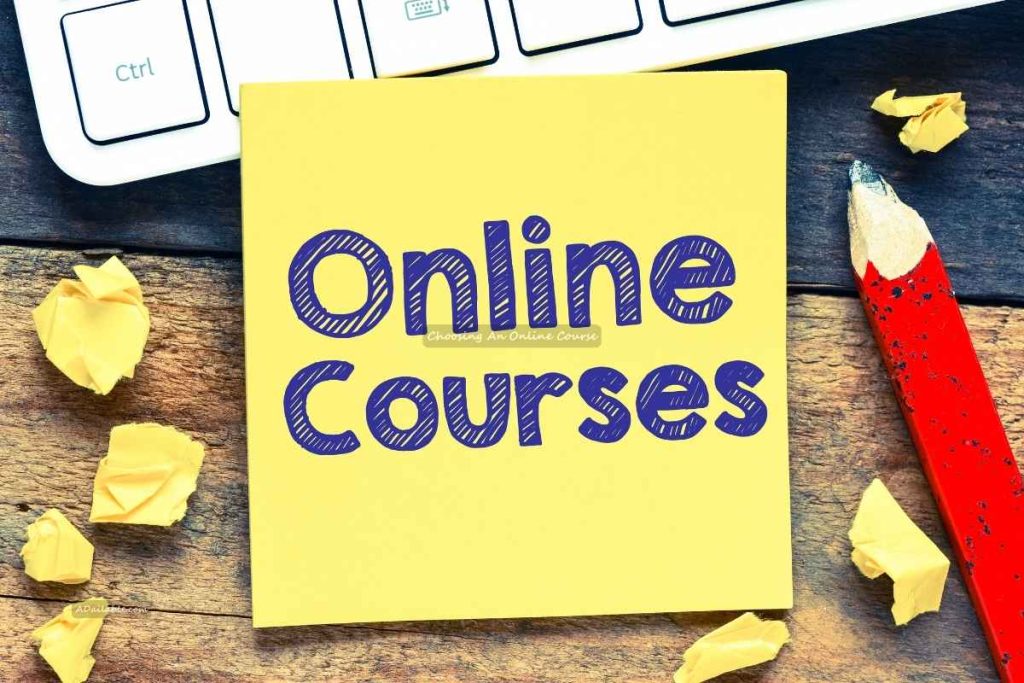
This guide explains what to check before Choosing An Online Course so you can make a more confident decision and avoid wasting time or money.
Know Your Learning Goal First
Before Choosing An Online Course, start by asking why you want to take it. A clear goal makes it easier to compare options.
Your goal may be to:
- Learn a new skill
- Improve your current job skills
- Prepare for a career change
- Start a side project
- Understand a topic better
- Earn a certificate
- Build a portfolio
- Study for personal interest
- Support a business idea
- Refresh old knowledge
A vague goal like “I want to learn marketing” may make the search harder. A clearer goal like “I want to learn basic social media advertising for a small business” will help you choose a better course.

When Choosing An Online Course, the best option is usually the one that matches your real goal, not the one with the most exciting sales page.
👉 “Readers comparing learning options may also find this discussion about what parents think about homeschool and public school useful.”
Check The Course Level
Online courses are often made for different levels. Some are for complete beginners. Some are for intermediate learners. Others are advanced and require previous knowledge.
Before enrolling, check whether the course is suitable for your level.
Look for phrases such as:
- Beginner-friendly
- No experience needed
- Intermediate level
- Advanced training
- Professional course
- Foundation course
- Step-by-step course
- For business owners
- For students
- For working professionals
If you are new to the topic, avoid courses that assume too much background knowledge.
If you already know the basics, a beginner course may feel too slow.
Choosing An Online Course becomes easier when you know where you are starting from.
Review The Course Curriculum
The curriculum is one of the most important things to check. A good online course should clearly explain what lessons, modules, or topics are included.
Look for a course outline that shows:
- Main topics
- Lesson names
- Course sections
- Learning outcomes
- Practical exercises
- Assignments
- Projects
- Downloadable materials
- Final tasks
- Bonus lessons, if any
Avoid courses that only give vague promises without explaining what you will actually learn.
A useful curriculum should move in a logical order. It should begin with basics, build knowledge step by step, and help learners apply what they learn.
When Choosing An Online Course, do not rely only on the headline. Read the course content carefully.
Check What You Will Be Able To Do After The Course
A good course should help you understand what result to expect. This does not mean it should promise a guaranteed job, income, or success. But it should explain what skills or knowledge you may gain.

Good learning outcomes may sound like:
- You will understand the basics of the topic
- You will be able to complete a simple project
- You will learn how to use a specific tool
- You will practise a step-by-step process
- You will create a portfolio piece
- You will know how to avoid common mistakes
- You will be ready for a more advanced course
Be careful with courses that promise unrealistic results, fast wealth, guaranteed success, or expert-level ability in only a few hours.
Choosing An Online Course should be based on realistic expectations.
Research The Instructor
The instructor matters. A clear, experienced, and practical instructor can make a big difference in how easy the course is to follow.
Before Choosing An Online Course, check the instructor’s background.
Look for:
- Experience in the subject
- Teaching style
- Professional history
- Student feedback
- Portfolio or examples
- Public content such as videos or articles
- Clear communication
- Updated knowledge
- Practical experience
An instructor does not always need to be famous. But they should be credible and able to explain the subject clearly.
If possible, watch a preview lesson to see if you like their voice, pace, and teaching method.
Watch Preview Lessons
Many online courses offer free previews. These short lessons can help you understand whether the course is right for you.
When watching a preview, ask:
- Is the instructor easy to understand?
- Is the sound quality clear?
- Are the slides readable?
- Is the pace too fast or too slow?
- Does the teacher explain ideas clearly?
- Does the course feel practical?
- Do you enjoy the teaching style?
- Does it match your learning level?
A good preview can save you from buying a course that does not fit your needs.
Choosing An Online Course without checking the teaching style can lead to disappointment later.
Read Reviews Carefully
Reviews can be helpful, but they should be read with care. Some reviews are detailed and useful. Others may be too emotional, too vague, or based on expectations that are different from yours.
Useful reviews often mention:
- Course structure
- Instructor quality
- Lesson clarity
- Practical value
- Support quality
- Course updates
- Problems or missing areas
- Whether beginners can follow it
- Whether the course matched the description
Be careful with reviews that only say “great course” or “bad course” without details.
Also, do not rely only on star ratings. A course with fewer but detailed reviews may be more useful than a course with many short reviews.
Compare More Than One Course
Before Choosing An Online Course, compare a few options. This helps you understand the market and avoid buying the first course you see.
Compare:
- Price
- Course length
- Instructor experience
- Curriculum
- Reviews
- Certificate
- Support
- Refund policy
- Lifetime access
- Updates
- Assignments
- Practical projects
- Language and subtitles
- Platform quality
You do not need to compare endlessly. Three to five options are usually enough to understand which course offers the best fit.
Think About Time Commitment
Some online courses are short and simple. Others require weeks or months of steady study.
Before buying, check:
- Total course length
- Number of lessons
- Assignment time
- Project time
- Weekly study recommendation
- Access period
- Deadline, if any
- Whether the course is self-paced
- Whether there are live sessions
If you are busy, a long course may be difficult unless it is flexible.
If you want deep learning, a very short course may not be enough.
Choosing An Online Course should include an honest look at your schedule.
Check The Learning Format
Different courses use different formats. Some learners prefer video. Others prefer reading, worksheets, exercises, quizzes, or live classes.
Common formats include:
- Video lessons
- Text lessons
- Live webinars
- Recorded classes
- Downloadable PDFs
- Quizzes
- Assignments
- Projects
- Discussion groups
- Coaching calls
- Practice exercises
- Case studies
Think about how you learn best.
If you learn by doing, choose a course with exercises and projects.
If you learn by watching, video lessons may be enough.
If you need accountability, live sessions or group support may help.
Look For Practical Exercises
A course is often more useful when it includes practice. Watching videos alone may not be enough to build skill.
Practical learning may include:
- Worksheets
- Quizzes
- Projects
- Templates
- Practice tasks
- Case studies
- Step-by-step exercises
- Real examples
- Feedback opportunities
- Portfolio work
When Choosing An Online Course, ask whether the course helps you apply the knowledge.
A course that teaches theory and gives practice is usually stronger than one that only explains ideas.
Check If A Certificate Matters
Some courses offer certificates. A certificate can be useful, but it depends on your goal.
A certificate may help if:
- You want to show completed training
- Your employer values it
- The platform is recognised
- The course is connected to a professional skill
- You need proof of participation
- You are building a profile or portfolio
A certificate may matter less if:
- You are learning for personal interest
- The platform is unknown
- The course has no practical value
- The certificate is not recognised
- You need real skills more than proof
When Choosing An Online Course, do not pay more only because the course includes a certificate. Check whether the certificate has real value for your needs.
Understand The Price
Course prices can vary widely. Some online courses are free. Some are low-cost. Others are expensive because they include coaching, live support, professional training, or recognised certification.
Before paying, ask:
- What is included?
- Is the price one-time or subscription-based?
- Are there hidden fees?
- Does the course include updates?
- Is the certificate included?
- Are assignments reviewed?
- Is there live support?
- Is there a refund policy?
- Does the course match the price?
A cheap course is not always bad. An expensive course is not always better.
Choosing An Online Course should be based on value, not only price.
Check The Refund Policy
A clear refund policy can reduce risk, especially if you are buying from a platform or instructor for the first time.
Before purchasing, check:
- Is there a refund period?
- How many days do you have?
- Are there conditions?
- Do you need to complete less than a certain percentage?
- How do you request a refund?
- Are subscription payments refundable?
- Does the policy apply to discounts?
- Is the wording clear?
If a course is expensive and has no clear refund policy, think carefully before buying.
Look For Student Support
Support can make a big difference, especially for technical or practical courses.
Support may include:
- Discussion forum
- Student community
- Email support
- Live Q&A
- Feedback on assignments
- Teacher replies
- Peer support
- Coaching calls
- Help desk
- Resource library
Some learners do well alone. Others need support to stay motivated.
When Choosing An Online Course, think about whether you need help, feedback, or community.
Check Course Updates
Some subjects change quickly. This is especially true for technology, marketing, software, design tools, online business, finance, and digital platforms.
Before buying, check whether the course has been updated recently.
Look for:
- Recent lesson updates
- Current screenshots
- Updated tools
- New examples
- Active instructor
- Recent student comments
- Ongoing support
- New modules
A course about timeless skills may not need frequent updates. But a course about changing tools should not feel outdated.
Be Careful With Big Promises
Some courses use strong marketing to attract buyers. Be careful with promises that sound too easy or too certain.
Warning signs include:
- Guaranteed income
- Guaranteed job
- Overnight success
- No effort needed
- Secret method
- Limited-time pressure
- Fake scarcity
- Unrealistic student results
- No clear curriculum
- No instructor information
- No refund details
- Only emotional testimonials
Choosing An Online Course should feel like a thoughtful decision, not a pressured purchase.
Consider Your Learning Style
Everyone learns differently. Some people like structure. Others like freedom. Some need visuals. Others prefer reading or practice.
Ask yourself:
- Do I like video lessons?
- Do I need written notes?
- Do I enjoy assignments?
- Do I need deadlines?
- Do I prefer self-paced learning?
- Do I need a teacher or community?
- Do I learn better with examples?
- Do I need short lessons?
- Do I want a certificate?
- Do I need mobile access?
The best course is not always the most popular one. It is the one that fits your learning style and goal.
Check Technical Requirements
Some courses require specific tools, software, devices, or internet speed.
Before enrolling, check:
- Do you need a laptop?
- Can you study on a phone?
- Is software required?
- Are tools free or paid?
- Do you need high-speed internet?
- Are downloads available?
- Are subtitles included?
- Is the course platform easy to use?
- Does it work in your country?
- Are live sessions in your time zone?
This is important because extra tools can increase the real cost of the course.
Think About Language And Accessibility
A course may be good but difficult to follow if the language, accent, subtitles, or platform is not comfortable for you.
Check:
- Course language
- Subtitle options
- Lesson speed
- Transcript availability
- Clear audio
- Mobile access
- Downloadable resources
- Font size in slides
- Accessibility features
- Time zone for live sessions
Choosing An Online Course should include comfort and access, not only content.
Decide If You Need Beginner Or Advanced Support
Beginner learners often need more structure. Advanced learners may prefer depth and flexibility.
Beginner-friendly courses should include:
- Clear explanations
- Step-by-step lessons
- Simple examples
- No assumed knowledge
- Practice exercises
- Basic terminology
- Support or Q&A
- Encouraging pace
Advanced courses should include:
- Detailed examples
- Real-world projects
- Case studies
- Deeper theory
- Expert techniques
- Feedback opportunities
- Updated materials
Choose the course that matches your current stage.
Check If The Course Includes Real Examples
Real examples help make learning easier. A course that only explains theory may feel difficult to apply.
Good examples include:
- Case studies
- Sample projects
- Walkthroughs
- Templates
- Demonstrations
- Before-and-after examples
- Common mistakes
- Real scenarios
- Practice files
When Choosing An Online Course, practical examples can help you understand how the knowledge works in real life.
Avoid Buying Too Many Courses
Many people buy online courses but do not finish them. This can happen when courses are bought quickly without a clear plan.
Before buying another course, ask:
- Have I finished the courses I already bought?
- Do I have time for this course?
- Do I need this now?
- Is this course different from what I already have?
- Will I use the skill soon?
- Is this a real need or impulse buying?
One completed course is more useful than many unfinished courses.
Make A Study Plan
After Choosing An Online Course, create a simple study plan.
Your plan may include:
- Study days
- Lesson goals
- Practice time
- Assignment deadlines
- Review sessions
- Notes
- Project work
- Breaks
- Completion date
A simple plan can help you finish the course instead of only starting it.
You do not need a strict schedule. Even two or three short study sessions each week can help if you stay consistent.
Use The Course Actively
To get value from an online course, do more than watch lessons.
Try to:
- Take notes
- Pause and practise
- Complete assignments
- Repeat difficult lessons
- Ask questions
- Join discussions
- Apply one idea immediately
- Save useful resources
- Build a small project
- Review key lessons
- Track progress
Active learning helps you remember more and use the skill better.
Common Mistakes To Avoid
Buying Only Because Of A Discount
A discount is not useful if the course does not match your goals.
Ignoring The Curriculum
Always check what is included before buying.
Choosing Only By Popularity
A popular course may not be right for your level or learning style.
Forgetting About Time
Even self-paced courses need time and attention.
Trusting Big Promises
Avoid courses that guarantee unrealistic results.
Not Checking Refund Rules
Know the refund policy before paying.
Skipping Practice
Practice is often where real learning happens.
Simple Checklist Before Buying
Use this checklist before Choosing An Online Course:
- I know my learning goal
- The course matches my level
- The curriculum is clear
- The instructor seems credible
- Reviews are detailed
- The price feels fair
- The refund policy is clear
- The course format fits my learning style
- I understand the time commitment
- I know if tools or software are needed
- The certificate has value if I need one
- There are practical exercises
- Support is available if I need help
- The course is updated if the topic changes often
If most answers are positive, the course may be a good fit.
👉 “Readers comparing online course options may also find this simple guide to Local Community Services useful for wider learning, support, and everyday needs.”
Conclusion
Choosing An Online Course is easier when you slow down and check the important details before paying. A good course should match your goal, level, budget, schedule, and learning style. It should also have a clear curriculum, credible instructor, useful reviews, realistic outcomes, and practical activities.
Do not choose only because of discounts, big promises, or attractive sales pages. Look at what you will actually learn and how you will use it.
The best course is not always the most expensive or most popular. The best course is the one that helps you make real progress.
With a clear checklist and realistic expectations, Choosing An Online Course can become a smarter, safer, and more useful decision.
FAQ
Is Choosing An Online Course Difficult?
Choosing An Online Course can feel difficult because there are many options, but it becomes easier when you know your goal, budget, level, and preferred learning style.
What Should I Check Before Buying An Online Course?
Check the curriculum, instructor background, reviews, price, refund policy, course level, certificate value, support options, and time commitment.
Are Online Course Certificates Worth It?
Some certificates are useful, especially if employers or clients recognise them. Others may have limited value. The skill you learn is often more important than the certificate.
How Do I Know If An Online Course Is Good?
A good course usually has a clear structure, realistic learning outcomes, credible instructor, useful reviews, practical exercises, and fair pricing.
Should I Choose A Free Or Paid Online Course?
Free courses can be useful for basic learning. Paid courses may offer more structure, support, projects, or certificates. Choose based on your goal and budget.
What Are Red Flags When Choosing An Online Course?
Red flags include guaranteed income claims, unclear curriculum, fake urgency, no refund policy, no instructor details, poor reviews, and unrealistic promises.
How Long Should An Online Course Be?
The right length depends on the topic. A short course can work for simple skills, while deeper subjects may need more lessons, practice, and projects.
Do I Need A Certificate From Every Online Course?
No. If you are learning for personal use, a certificate may not matter. If you need proof for work or career development, check whether the certificate is recognised.
How Can I Finish An Online Course?
Make a study plan, set small goals, take notes, complete exercises, apply what you learn, and avoid buying too many courses at once.
What Is The Best Way To Compare Online Courses?
Compare course level, curriculum, instructor experience, reviews, price, support, refund policy, certificate value, and practical exercises before choosing.